— Lifestyle Amenity
Forest Park.
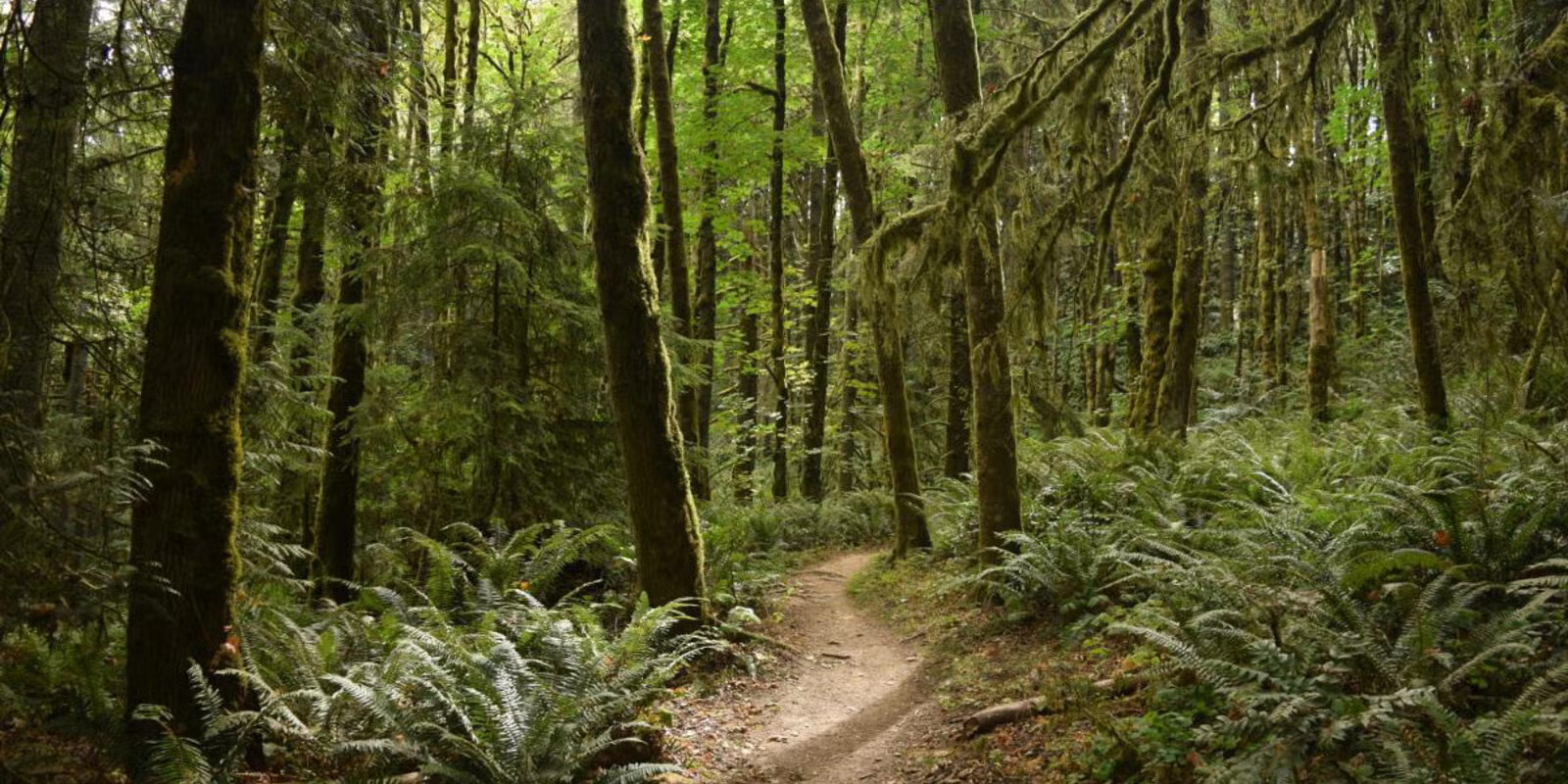
Your own urban wilderness — 5,200 acres of towering Douglas fir, moss-covered trails, and Pacific Northwest serenity, just minutes from the front door at 2059 NW Ramsey Dr.
Photo: Portland Parks & Recreation (portland.gov/parks/forest-park)
— The Park
Portland's only designated urban wilderness.
Forest Park stretches across the Tualatin Mountains of Northwest Portland, making it one of the largest urban forest reserves in the entire United States. At approximately 5,200 acres, the park spans more than 8 miles along the Willamette River and encompasses a breathtaking landscape of second-growth temperate rainforest — with small pockets of rare old-growth still surviving.
The dominant canopy features Douglas fir, western hemlock, and western red cedar, creating a dense, cathedral-like forest environment that feels hours away from civilization — yet is just a short drive from your doorstep. For residents of the West Hills, Forest Park isn't a destination; it's a daily backyard extending across thousands of pristine acres.
The park's crown jewel is the Wildwood Trail, a 30.2-mile path that traverses the entire length of the park from the Hoyt Arboretum in Washington Park to the Trail of Ten Falls in Silver Falls State Park. Recognized as the longest soft-surface trail within an urban boundary in the United States, the Wildwood offers everything from contemplative morning walks to full-day backcountry adventures.
Another beloved route is Leif Erikson Drive, an approximately 11-mile gravel fire road that runs through the heart of the park. Wide, relatively flat, and accessible, Leif Erikson is a favorite for trail runners, casual hikers, cyclists, and families — a gentle introduction to the forest that rewards every visit with fresh air and deep green quiet.
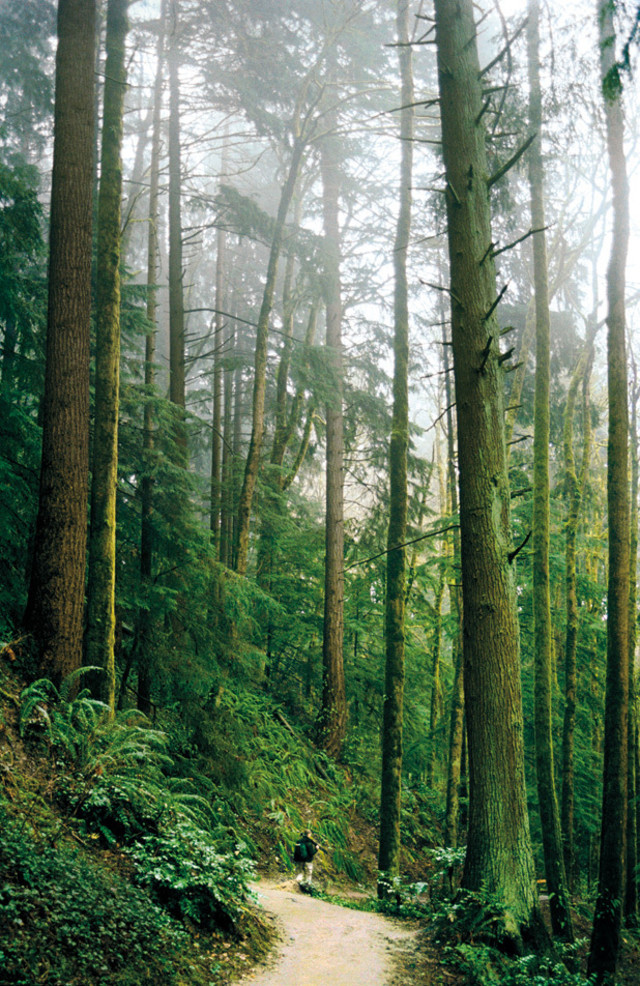
A woodland path through Forest Park's West Hills — one of over 80 miles of interconnected trails accessible from the surrounding neighborhoods.
Photo: Portland Monthly (pdxmonthly.com)
01 — By the Numbers
A forest unlike any other.
One of the largest urban forest reserves in the United States
Hiking, cycling, and equestrian trails winding through old-growth and second-growth forest
Including owls, woodpeckers, and migratory songbirds
Black-tailed deer, bobcats, elk, and several bat species call it home
Stretching from the West Hills to the banks of the Willamette River
Portland's enduring commitment to preserving urban wilderness for future generations
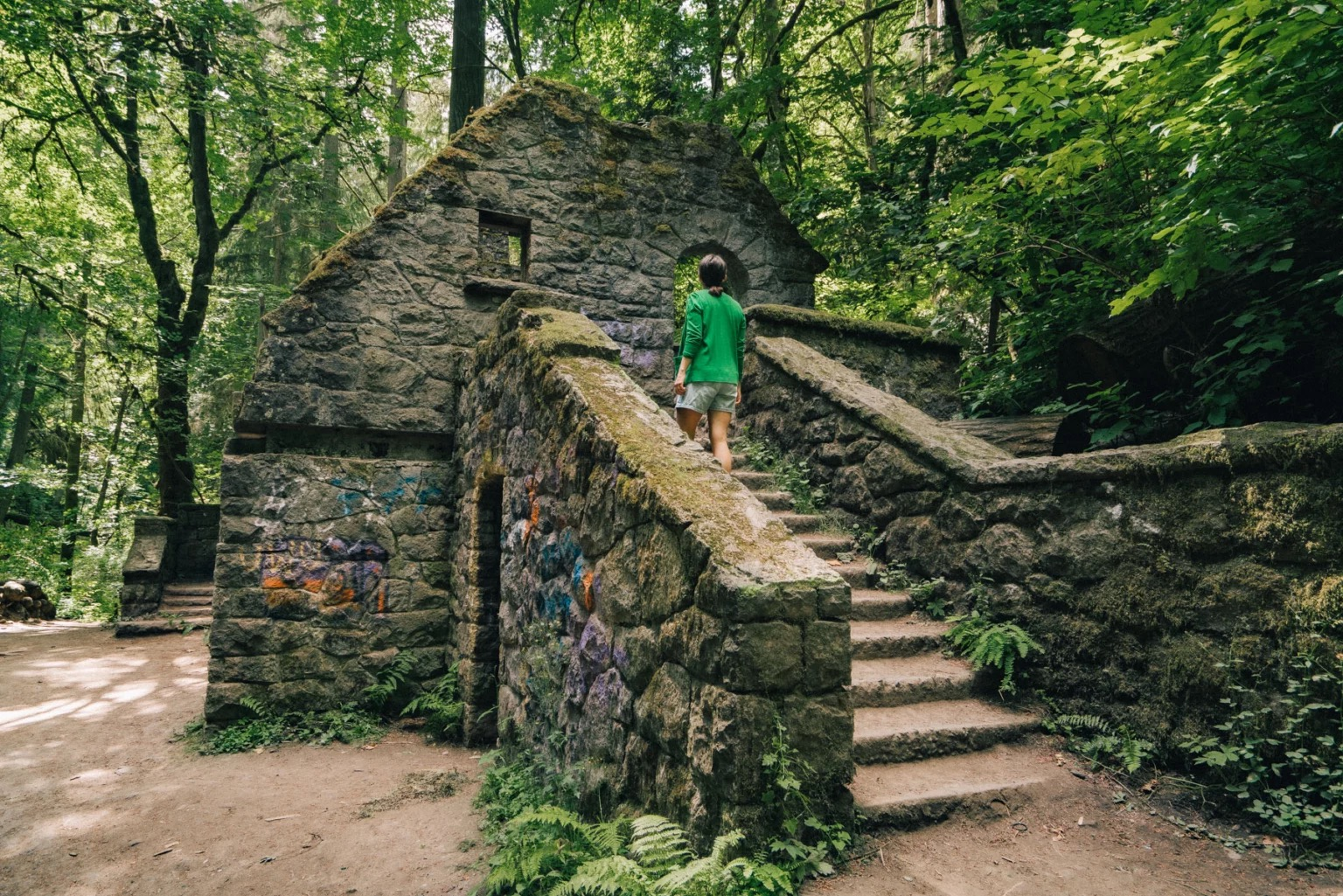
Weathered stone ruins stand as a quiet testament to the history embedded within Forest Park's forested landscape.
Photo: Forest Park Conservancy (forestparkconservancy.org)
02 — Wildlife
A living, breathing ecosystem.
Forest Park serves as a vital biological corridor connecting the Tualatin Mountains to the Willamette River. The park hosts over 62 mammal species — including black-tailed deer, coyotes, bobcats, and the occasional elk — alongside more than 112 bird species.
Keen-eyed hikers may spot great horned owls roosting in old-growth snags, red-tailed hawks circling above the canopy, or pileated woodpeckers drumming on cedar trunks. In the understory, banana slugs and Pacific tree frogs are constant companions along the trail.
The park's ecological significance led to its designation as an important component of Portland's urban tree canopy, filtering air, managing stormwater, and providing a refuge for wildlife within the metropolitan boundary.
03 — Trail Highlights
Named trails, endless routes.
Forest Park's trail network offers something for every pace and ability — from flat, wide fire roads to rugged ridgeline single-track.
Wildwood Trail
The longest soft-surface trail within an urban boundary in the United States. The Wildwood traverses the full length of Forest Park, connecting Hoyt Arboretum in Washington Park to the park's northern boundary. Expect deep forest canopy, creek crossings, and steady elevation changes.
Difficulty: Moderate to Strenuous · Blazed orange
Leif Erikson Drive
A wide, gravel fire road running through the heart of the park — ideal for trail runners, cyclists, families, and anyone seeking a gentler forest experience. Leif Erikson connects multiple trailheads and offers a mellow, scenic route under towering evergreens.
Difficulty: Easy · Wide gravel surface
Ridge Trail
A more challenging ridgeline route offering panoramic valley views through breaks in the canopy. Popular with experienced hikers looking for elevation gain and a quieter, more remote experience within the park.
Difficulty: Moderate to Strenuous · Single-track
04 — Trailhead Access
Your closest trailheads.
Living off Skyline Boulevard places you within minutes of several Forest Park access points — from the nearest pullouts to popular, well-known trailheads. Here are the closest options for spontaneous trail days.
Lower Macleay Trailhead
NW Upshur St & NW Lower Macleay Rd
Drive Time
~8 min from property
Difficulty
Easy to Moderate
The most popular entry point, leading past the iconic Witch's Castle (Stone House) and connecting to the Wildwood Trail.
Street parking along Lower Macleay Rd
Wildwood Trail – Springville Rd Access
NW Springville Rd & Skyline Blvd
Drive Time
~3 min from property
Difficulty
Moderate
One of the closest access points to 2059 NW Ramsey Dr. Connects directly to the Ridge Trail and Wildwood Trail network.
Small gravel lot and shoulder parking
Upper BPA Road Trailhead
NW Skyline Blvd (near NW BPA Rd)
Drive Time
~2 min from property
Difficulty
Moderate to Strenuous
A rustic pullout providing quiet, direct access to the upper Wildwood and Fire Lane trails with minimal crowds.
Small gravel pullout (6–7 cars)
Newberry Road Trailhead
NW Newberry Rd & Skyline Blvd
Drive Time
~4 min from property
Difficulty
Moderate
A northern access point offering a quieter Forest Park experience with connecting loops to Fire Lane trails.
Roadside pullout
NW Thurman St Trailhead
NW Thurman St (western terminus)
Drive Time
~10 min from property
Difficulty
Easy
Gateway from the Alphabet District, connects to Leif Erikson Drive and the lower Macleay corridor.
Street parking in residential area
Parking at Skyline Boulevard trailheads is limited — expect small gravel pullouts. Arrive early on weekends. Portland Parks & Recreation provides a printable trail map detailing all access points and trail connections.
05 — Get Involved
Help protect the forest you call home.
The Forest Park Conservancy is the nonprofit organization dedicated to protecting the ecological health of Forest Park and Marquam Nature Park. Their work keeps the trails passable, the invasive species in check, and the forest thriving for the millions of visitors who rely on it each year.
One of their signature programs is summer trail brushing — volunteer crews head into the park to cut back overgrown vegetation along trail corridors, keeping paths clear and safe for hikers, runners, and equestrians. It's hands-on conservation work that makes an immediate, visible difference on the ground.
Beyond brushing, the Conservancy organizes invasive plant removal, storm damage response through their Rapid Response Team, and year-round stewardship work parties across both Forest Park and Marquam Nature Park. Volunteers of all experience levels are welcome — no prior trail work knowledge is required.
Join a brushing event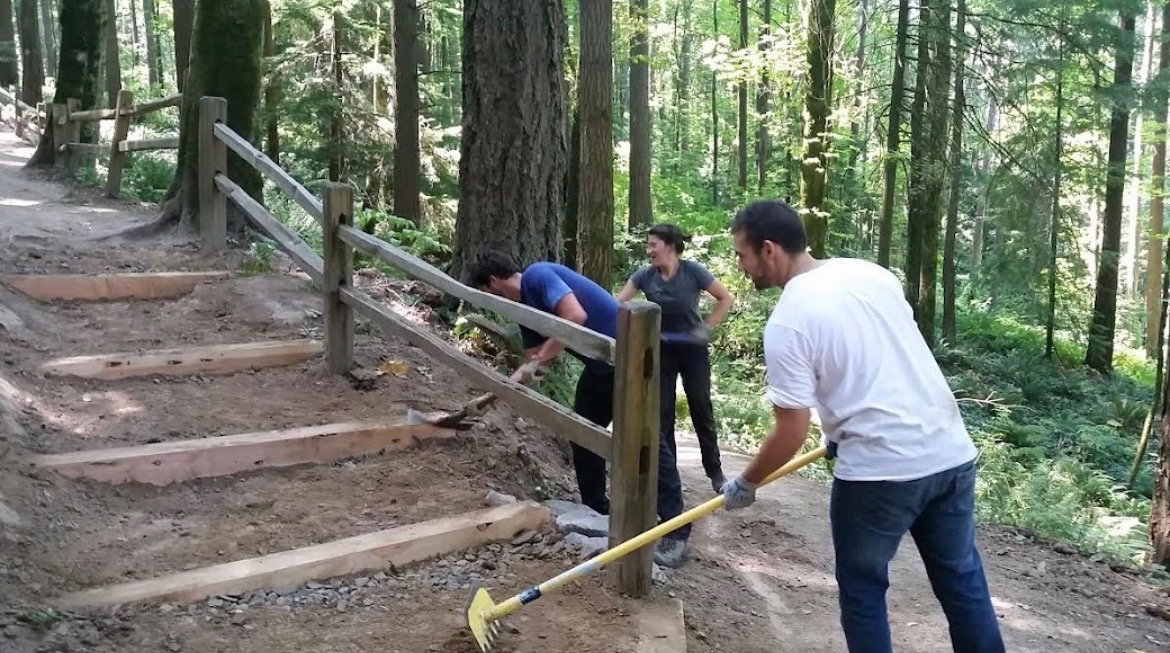
Ways to give back
Trail Brushing Events
Summer volunteer sessions focused on clearing overgrown vegetation along Forest Park and Marquam Nature Park trail corridors.
Invasive Species Removal
Work parties targeting English ivy, Himalayan blackberry, and other invasive plants that threaten the park's native understory.
Rapid Response Team
Volunteer crews that survey and clear storm damage across the park's trail network, restoring access after wind and ice events.
Ambassador Program
Experienced volunteers who serve as park stewards, educating visitors and monitoring trail conditions throughout the year.
— Experience It
This is your backyard.
Forest Park isn't a day trip — it's a daily ritual. Lace up your boots from the driveway and be on a forest trail in minutes. This is the lifestyle that awaits at 2059 NW Ramsey Dr.